Summer, 1818
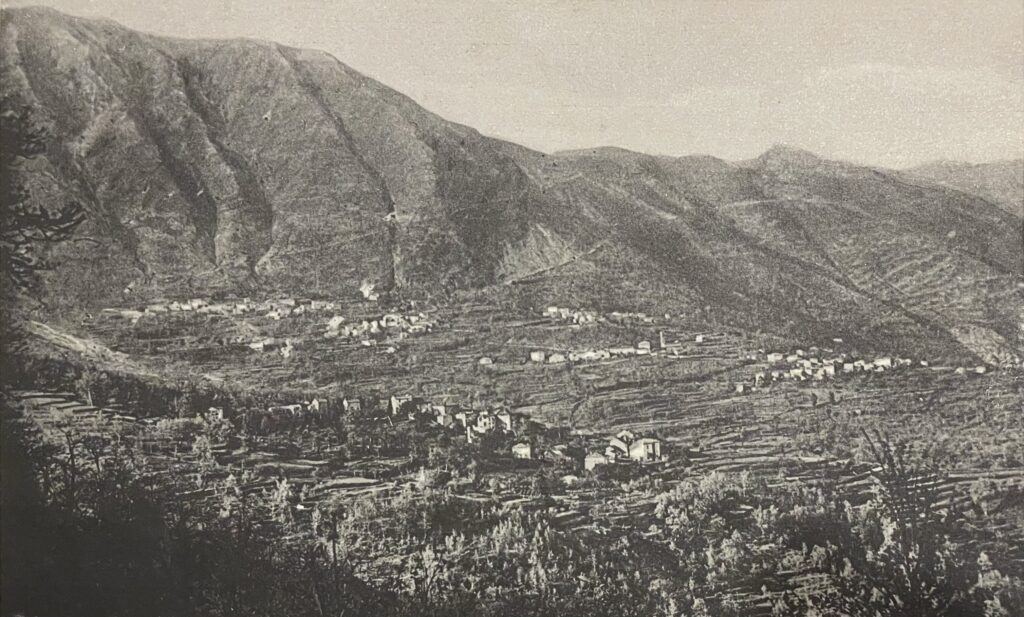
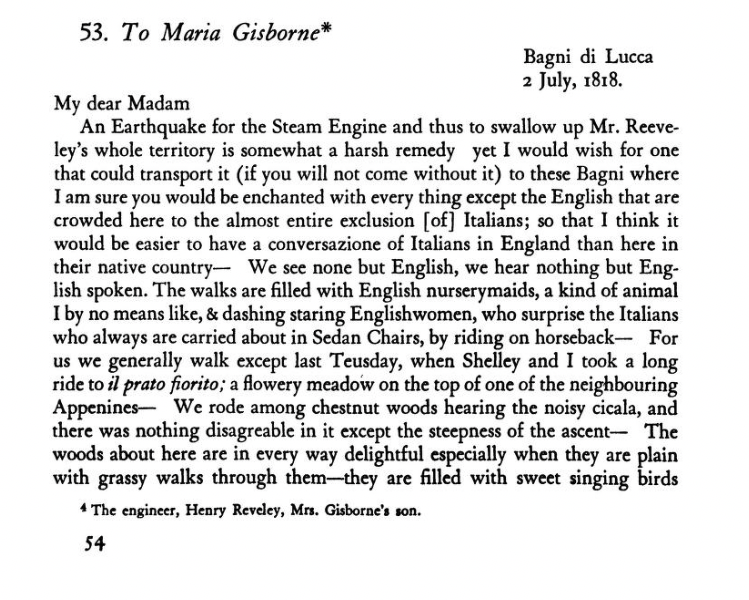
For those of us with roots in Bagni di Lucca and the slopes of Prato Fiorito, the summer of 1818 provides an unusual historical perspective on the valley through the writings of several well-known English visitors.
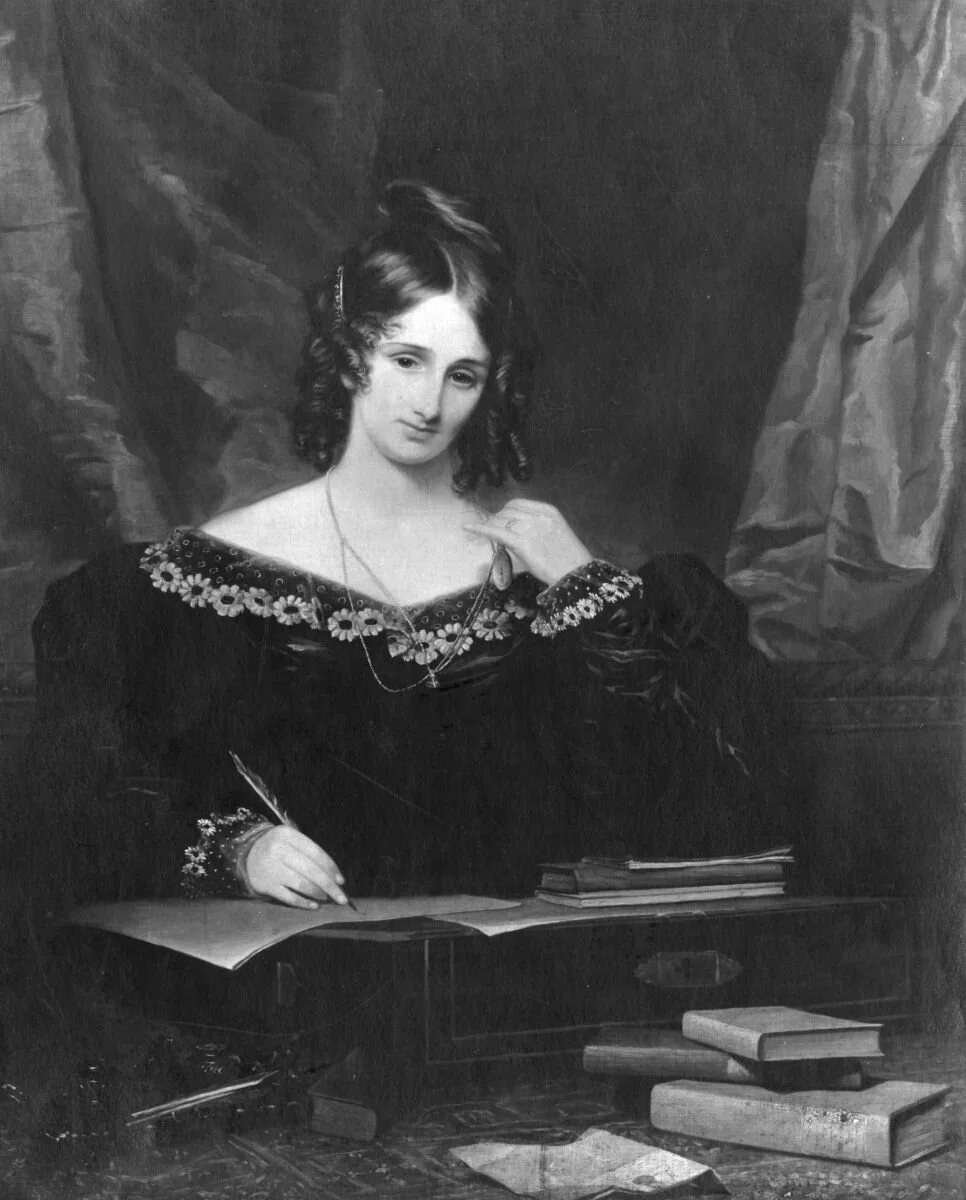
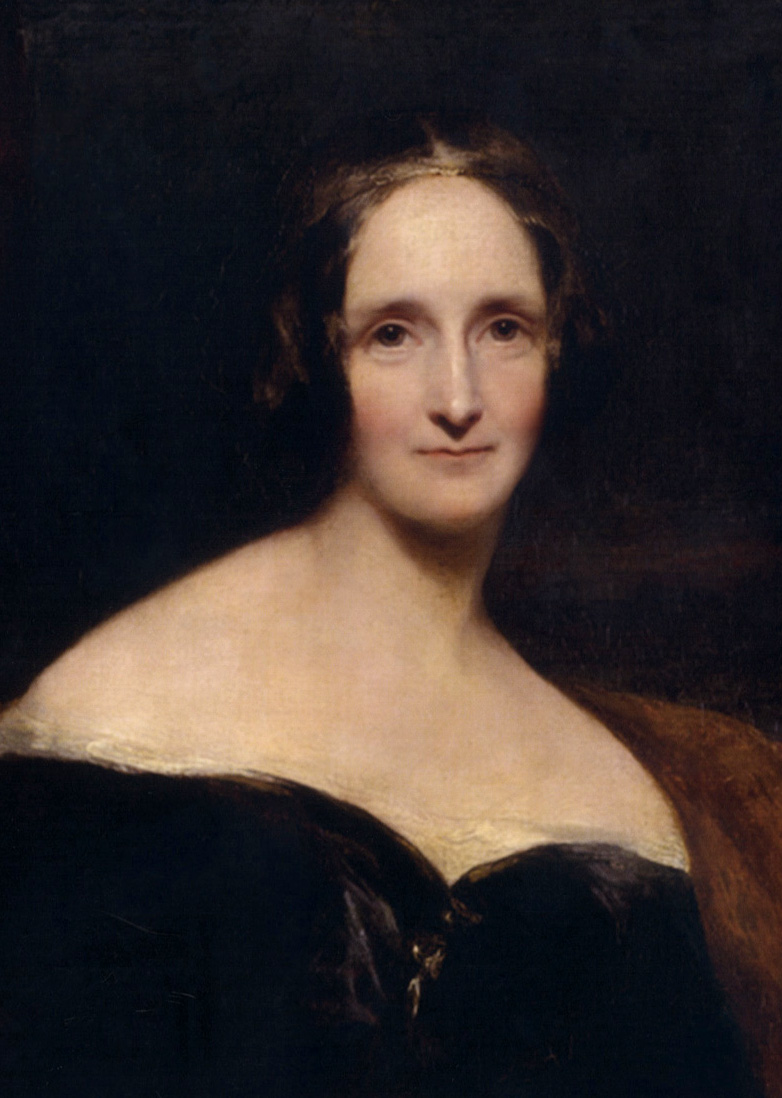
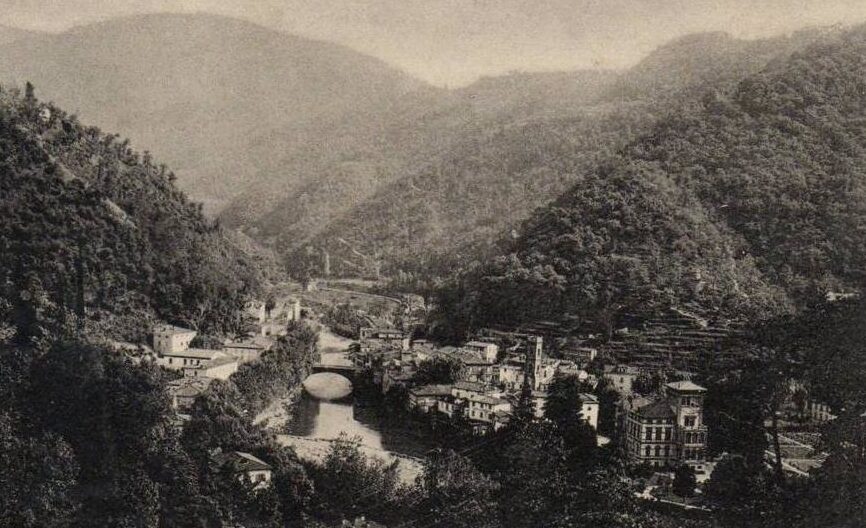
In the summer of 1818, Percy Bysshe Shelley, his wife Mary — author of Frankenstein — together with Claire Clairmont and their children, stayed at Casa Bertini in Bagno alla Villa above Bagni di Lucca. They had arrived in Italy only a few months earlier, leaving England in March 1818 (Seymour, 2000, p. 193), and remained in the Val di Lima from June until late August.
For descendants of families from Bagni di Lucca and Prato Fiorito more specifically, the letters and journals written during this period are historically valuable because they document the landscape, environment, and social setting in which local families lived. Although these writings focus primarily on the experiences of foreign visitors, they still provide detailed contemporary descriptions of the valley in the early nineteenth century.
Arriving in the Valley
Percy Shelley travelled ahead to secure accommodation, reaching Bagni di Lucca from Livorno in late May 1818 (Seymour, 2000, p. 196). He rented Casa Bertini in the historic village of Bagno alla Villa, an area that had attracted foreign visitors for centuries.
When Mary Shelley arrived with the children on 11 June, she described the house in a letter to Maria Gisborne:
“Our house is small but commodious and exceedingly clean for it has just been painted and the furniture is quite new — we have a small garden and at the end of it is an arbour of laurel trees so thick that the sun does not penetrate it.”
(M. Shelley to Gisborne, 15 June 1818, in Bennett, 1980, Vol. I, p. 72)
The description is notable because it gives a practical view of domestic life in Bagni di Lucca during this period. The houses rented to foreign visitors required maintenance, furnishing, food supplies, and local labour. Families from the area were directly involved in this seasonal economy.
In the same letter, Mary also commented on the quietness of the valley:
“When I came here I felt the silence as a return to something very delightful from which I had been long absent.”
(M. Shelley to Gisborne, 15 June 1818, in Bennett, 1980, Vol. I, p. 72)
Her observation reflects the contrast between the rural environment of the Val di Lima and the larger Italian cities from which the Shelleys had recently travelled.
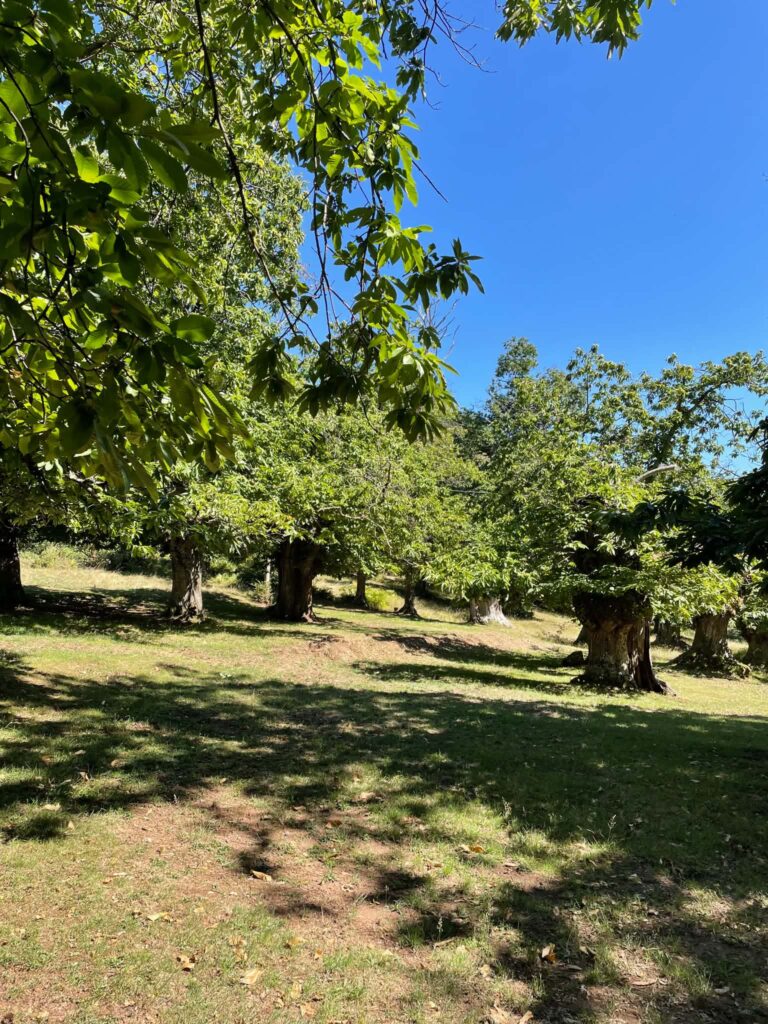
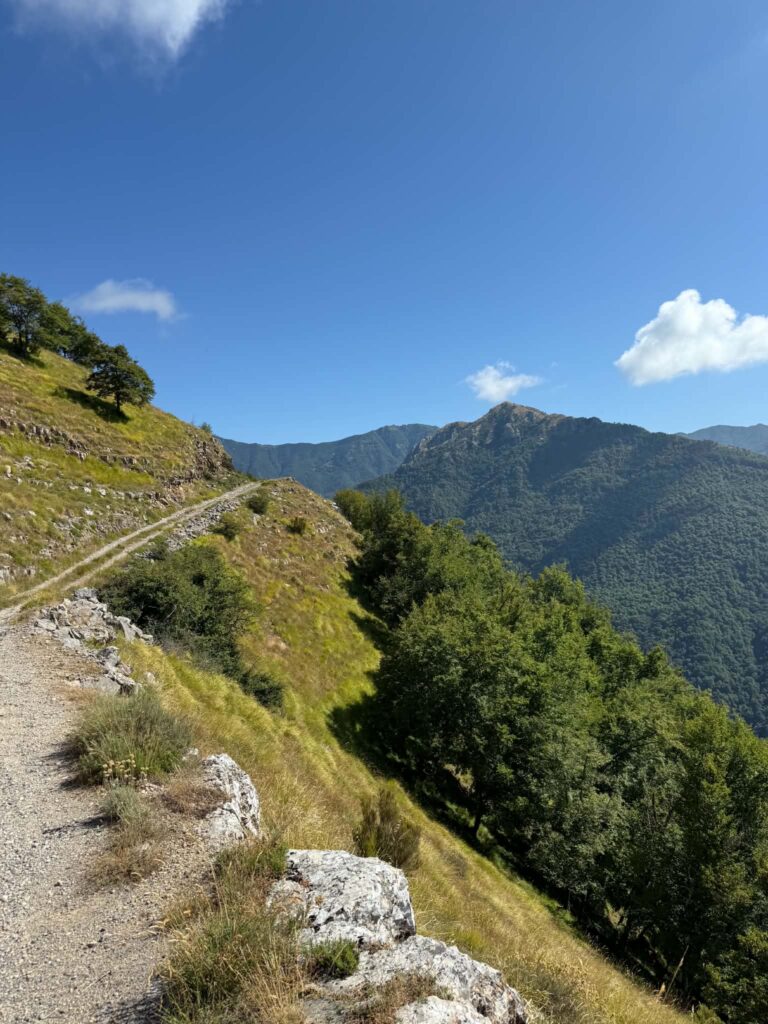
Chestnut Woods and Mountain Paths
The natural environment of the Val di Lima appears repeatedly in the Shelleys’ correspondence. Percy Shelley wrote to William Godwin on 25 July 1818:
“We are surrounded by mountains covered with thick chestnut woods — they are peaked and picturesque and sometimes you see peeping above them the bare summit of a distant Appenine. Vines are cultivated on the foot of the mountains… You can either walk by the side of the river or on commodious paths cut in the mountains, & for ramblers the woods are intersected with narrow paths in every direction.”
(P. Shelley to Godwin, 25 July 1818, in Jones, 1964, Vol. II, p. 27)
The paths Shelley describes were part of the valley’s agricultural and pastoral infrastructure, connecting settlements, chestnut groves, terraces, and higher grazing areas.
Shelley also briefly noted the importance of chestnuts to the local population, describing them as the eating chestnuts “on which the inhabitants of the country subsist in time of scarcity” (P. Shelley to Godwin, 25 July 1818, in Jones, 1964, Vol. II, p. 27).
This observation is historically significant. Chestnut cultivation formed a central part of the economy of the Apennine regions, including the Val di Lima. Chestnut flour was an important staple food and was particularly important during periods of poor harvest.
Mary and Percy Shelley also described the summer evenings around Bagni di Lucca, including the fireflies visible in the woods surrounding Casa Bertini. Percy wrote:
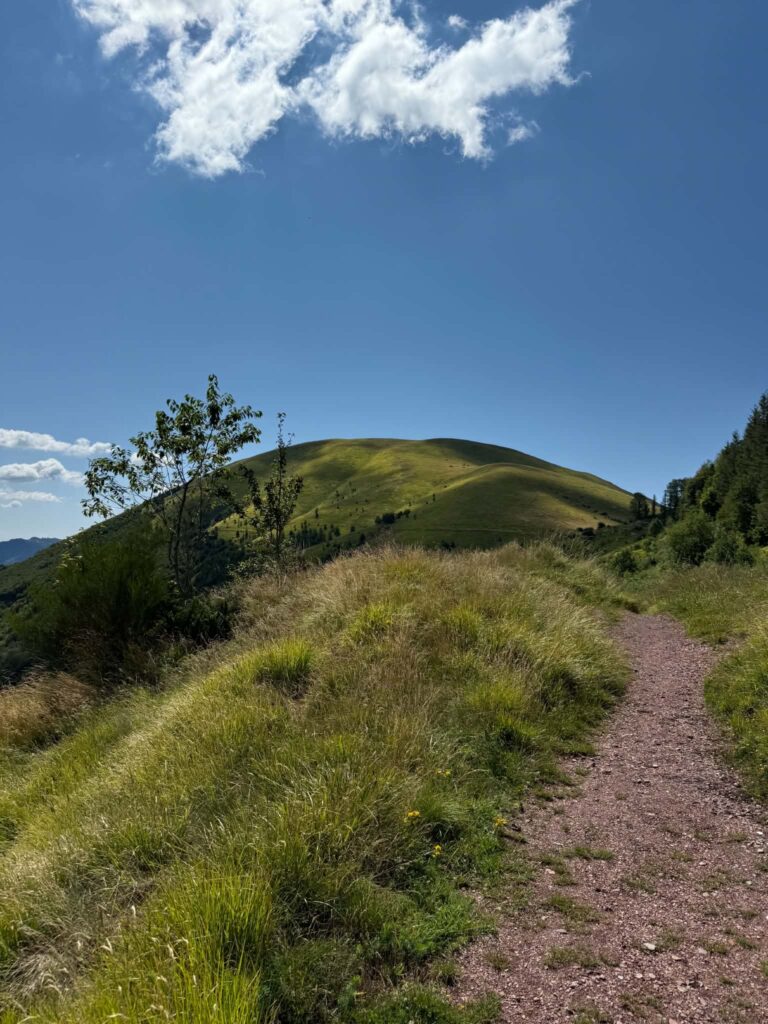
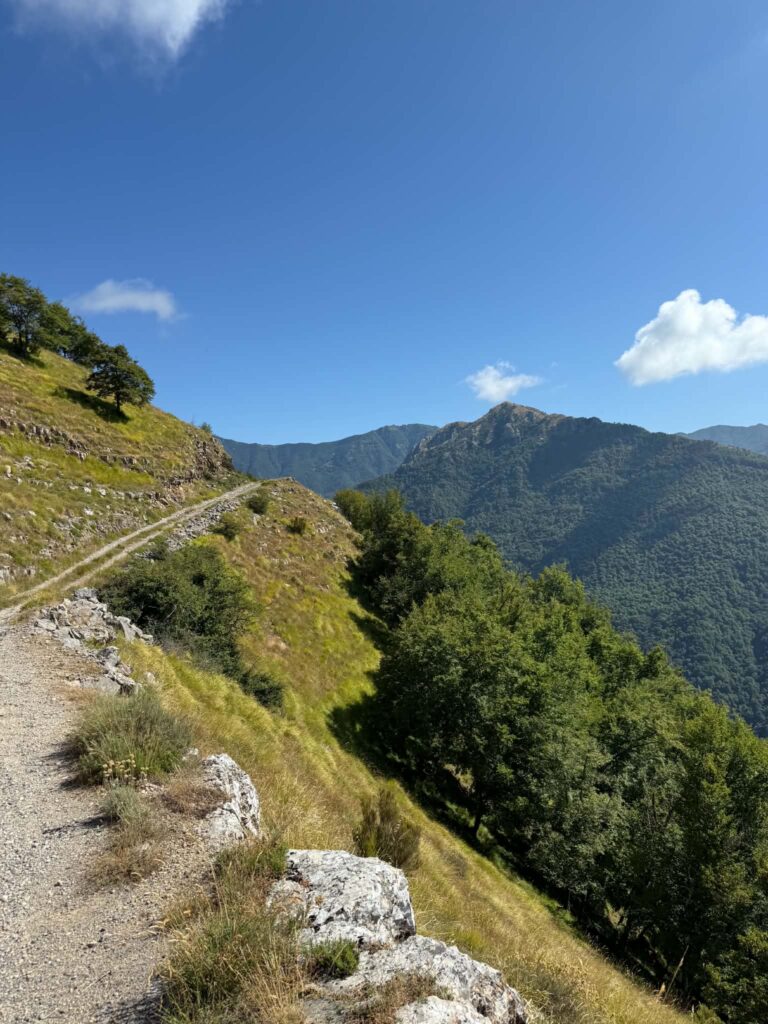
“We have ridden, Mary and I, once only, to a place called Prato Fiorito, on the top of the mountains: the road, winding through forests, and over torrents, and on the verge of green ravines, affords scenery magnificently fine…”
(P. Shelley to J. and M. Gisborne, 10 July 1818, in Jones, 1964, Vol. II, p. 22)
Although Shelley focused on the scenery, his account also documents the routes connecting the valley floor to the higher mountain pastures.
Prato Fiorito
Mary Shelley’s journal records that she and Percy rode to Prato Fiorito on 30 June 1818 (M. Shelley, Journal, 30 June 1818, in Feldman & Scott-Kilvert, 1987, p. 215).
Prato Fiorito is the broad mountain meadow above the chestnut belt overlooking the surrounding Apennine ridges. Historically, areas such as this were connected to seasonal grazing, movement between settlements, and mountain agriculture.
Percy Shelley described the route as passing “through forests, and over torrents, and on the verge of green ravines” (P. Shelley to J. and M. Gisborne, 10 July 1818, in Jones, 1964, Vol. II, p. 22).
Even Percy Shelley, who frequently wrote about landscapes, admitted difficulty describing the view adequately, writing that he could only “bid you, though vainly, come and see.”
The Baths and the Seasonal Economy
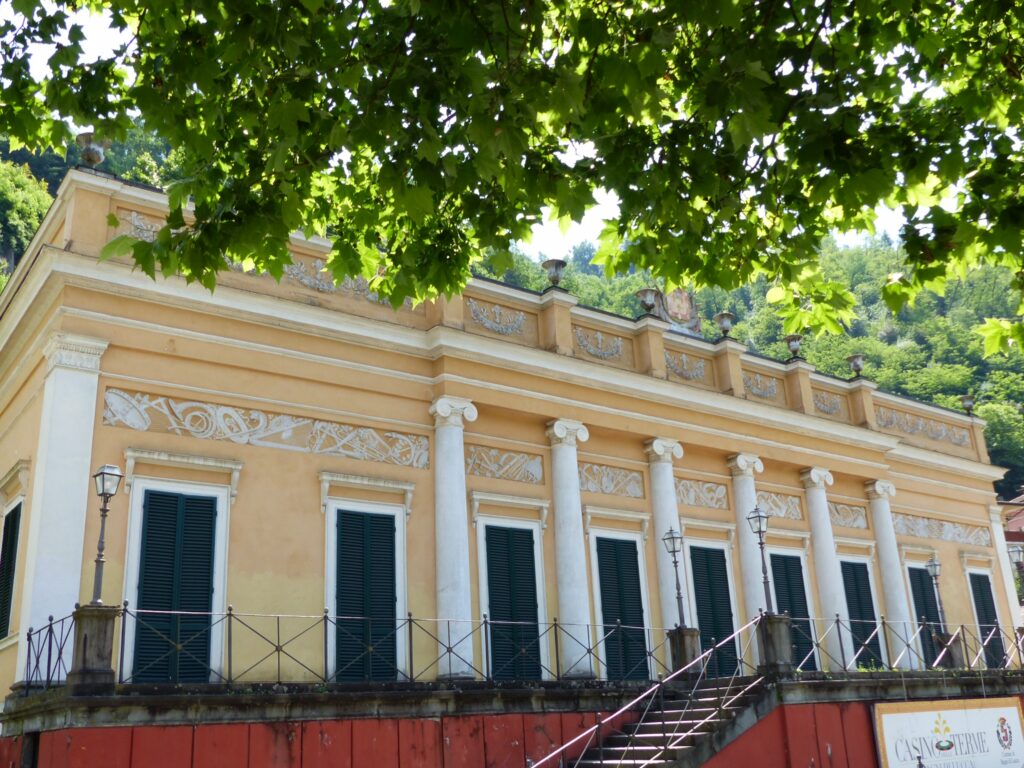
By 1818, Bagni di Lucca had become an established spa town attracting visitors from across Europe. Under Elisa Baciocchi, the roads and facilities of the town had been improved significantly (Seymour, 2000, p. 196).
The Casino at Ponte a Serraglio became an important centre of social life for visitors, including the Shelleys, who occasionally attended dances and gatherings there.
For the local population, however, the baths and Casino were also economic institutions. Foreign visitors rented houses, hired servants, purchased food locally, and contributed to the seasonal economy of the valley.
Mary Shelley’s letters contain several references to interactions with local residents, landlords, and tradespeople, although these individuals generally remain in the background of the surviving correspondence.
Percy Shelley’s Forest Pool
In a letter to Thomas Love Peacock dated 25 July 1818, Percy Shelley described bathing in a mountain pool above Bagni di Lucca:
“In the middle of the day, I bathe in a pool or fountain, formed in the middle of the forests by a torrent…”
(P. Shelley to Peacock, 25 July 1818, in Jones, 1964, Vol. II, p. 30)
He described the surrounding rocks, chestnut trees, and cold transparent water in considerable detail.
The streams and pools Shelley described were part of the everyday environment of the valley and would have been familiar to local inhabitants for practical as well as recreational reasons.


Study and Daily Life at Casa Bertini
The Shelleys spent much of their time reading, writing, and studying during their stay in Bagni di Lucca. Mary’s journal records readings from Shakespeare, Greek classical texts, and Italian literature, while Percy translated Plato’s Symposium during the summer (M. Shelley, Journal, June–August 1818, in Feldman & Scott-Kilvert, 1987, pp. 214–220).
Mary also continued studying Italian, which she had begun learning earlier that year.
At the same time, the household depended on ordinary domestic arrangements familiar to local residents: rented accommodation, purchased food, household labour, and local services. The Shelleys’ intellectual work took place within the everyday structure of life in the valley.
Byron and the Wider English Circle
Lord Byron was not present in Bagni di Lucca during the summer of 1818, as he was living in Venice at the time (Marchand, 1957, Vol. II, p. 635). Nevertheless, he remained closely connected to the group through Claire Clairmont and their daughter Allegra.
Letters arriving from Venice in August 1818 led Percy Shelley and Claire to leave Bagni di Lucca for Venice, while Mary remained temporarily at Casa Bertini with the children (M. Shelley, Journal, 16–17 August 1818, in Feldman & Scott-Kilvert, 1987, p. 219).
By the early 1820s, Byron and the Shelleys would become part of the well-known “Pisan circle” of English expatriate writers in Tuscany.
What the Sources Show — and What They Do Not
The writings of Mary and Percy Shelley provide valuable descriptions of the environment and atmosphere of the Val di Lima in 1818. However, they reveal relatively little about the experiences and perspectives of the local population themselves.
Most local inhabitants appear only indirectly in the surviving letters: as landlords, servants, tradespeople, guides, or anonymous figures encountered in daily life.
This limitation is important to recognise. The letters and journals are useful historical sources, but they reflect the perspective of educated foreign visitors rather than the voices of the communities living permanently in the valley.
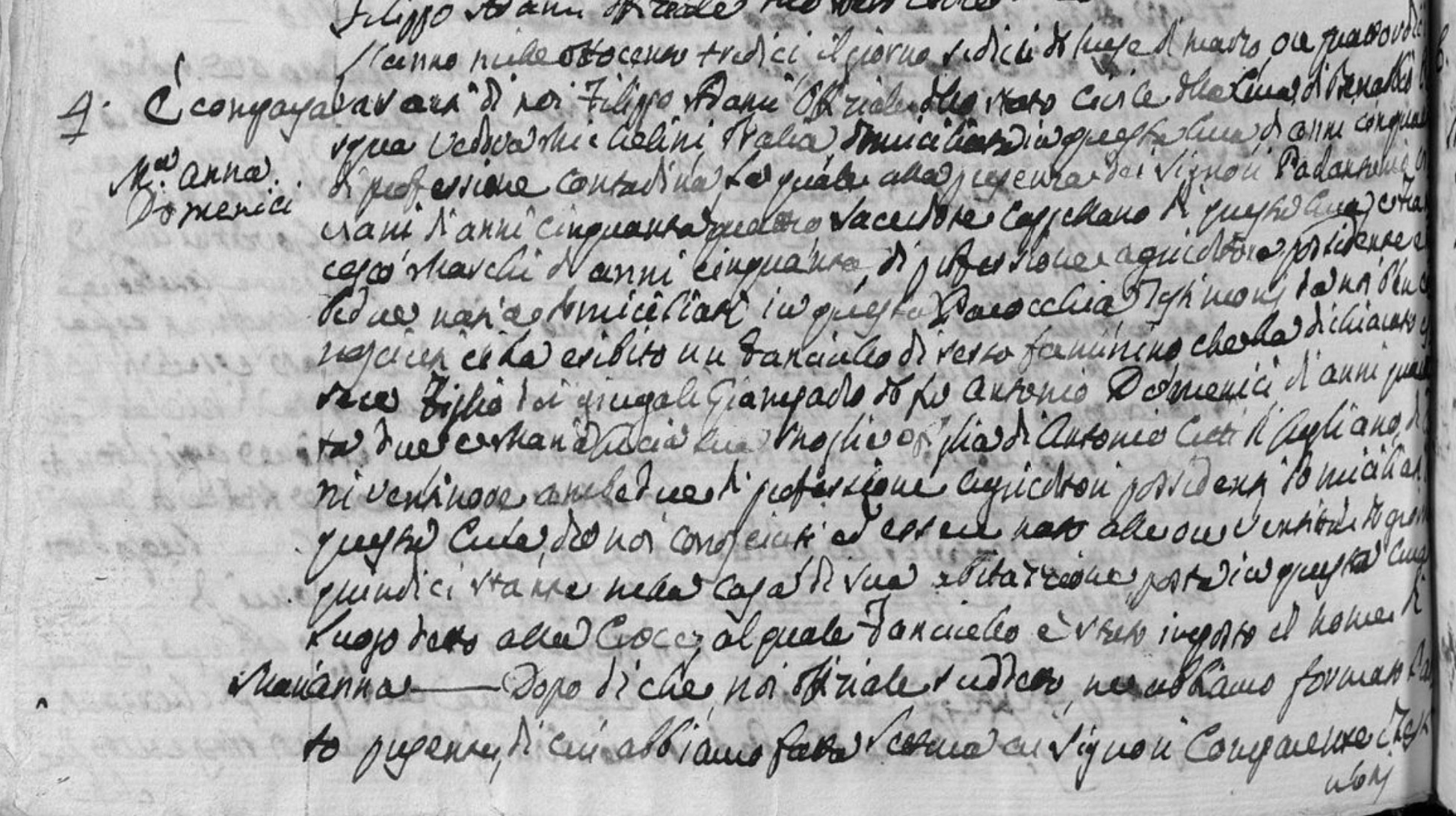
For this reason, genealogical research, parish records, civil records, and local histories remain essential for reconstructing the lives of families from Bagni di Lucca and Prato Fiorito during this period.
Conclusion
Percy Shelley later wrote that the Euganean hills were “not so beautiful as those of the Bagni di Lucca” (P. Shelley to Peacock, 8 October 1818, in Jones, 1964, Vol. II, p. 41), suggesting that the valley remained memorable to him long after he left.
Today, these letters and journals remain valuable because they preserve contemporary descriptions of the Val di Lima during the early nineteenth century: its chestnut woods, mountain paths, summer storms, rivers, and settlements.
For descendants of families from Bagni di Lucca and Prato Fiorito, these writings provide an additional historical perspective on the environment in which earlier generations lived and worked.
More from the blog…


Leave a Reply