The Mystery and the Method
This project began with a gap in the records. I was searching for the parents of my own ancestor, Maria Domenici, who was born in 1822—unfortunately within the narrow range of years for which records are not yet available online. What is known is that she died in July 1858, only a few days after giving birth to her first and only son, Paolo, in San Cassiano di Controne, Bagni di Lucca. From the outset, both the timing and the limited documentation surrounding her life suggested that reconstructing her origins would not be straightforward.
Here, I take you through a project that has lasted for more than a year, and is still not concluded.
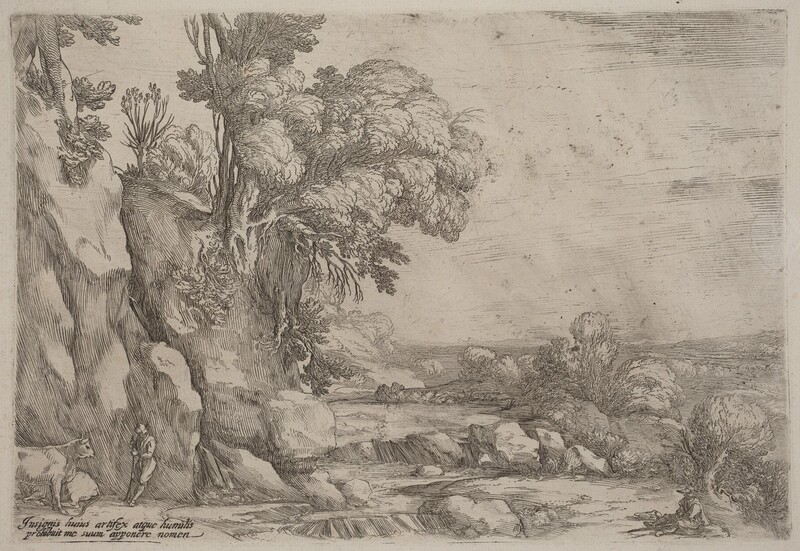
Domenici is not a common name in San Cassiano, and its absence is notable: it does not appear in the 1811 census, nor does it emerge as an established family in the village in the 1850s. This strongly suggested that Maria was not originally from San Cassiano, even though her marriage record—registered there in the 1850s—lists her as a resident. In that same record, her parents are named as Andrea Domenici and Giovanna Domenici, providing a starting point, but little immediate clarity. At the same time, other women bearing the Domenici surname appear in San Cassiano records, raising a broader question about who these women were, where they came from, and how they might be connected.
Because I had already indexed all civil records from San Cassiano for the periods 1807–1813 and 1851–1910 (most of which you can find here), I was confident that all instances of the surname within that village were already captured in my database. The next step, therefore, was to expand the search geographically. I began systematically collecting all occurrences of the surname Domenici in neighbouring villages within Bagni di Lucca, with the aim of identifying possible points of origin.
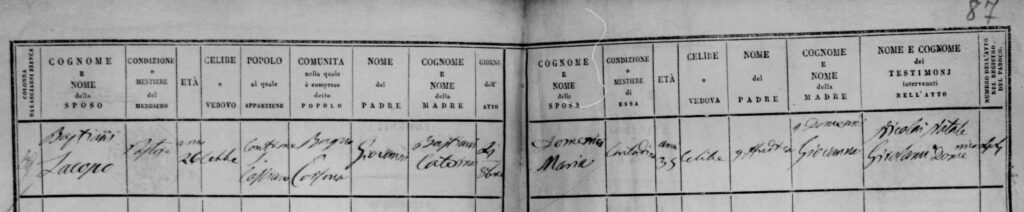
This was an entirely manual process. There was no automation involved—no full-text search, and no use of AI tools to locate names within the records. These tools are simply not available for most Italian crecords. Instead, it required working through thousands of pages on Antenati and FamilySearch. While some record sets include annual or decade indexes, large portions of the material—particularly between 1807–1813 and 1851–1865—must be read page by page. Progress depended on consistency rather than speed, and on maintaining enough attention to detail to recognize patterns as they emerged.


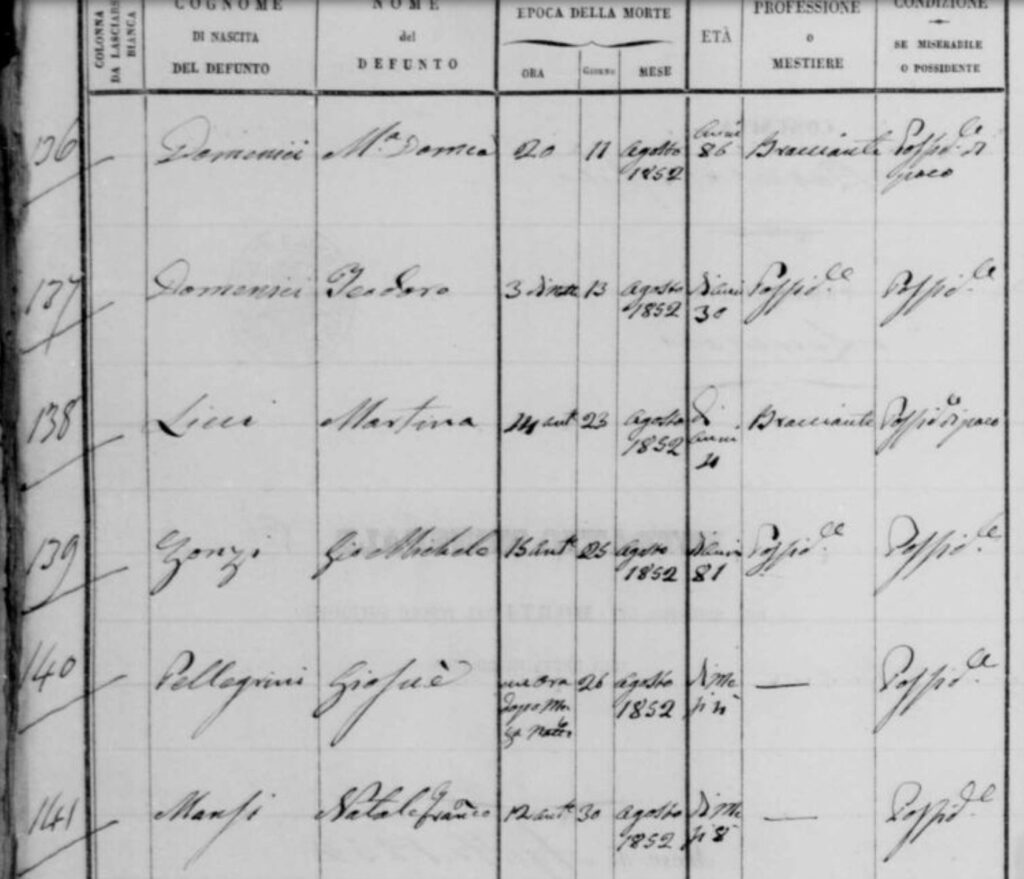
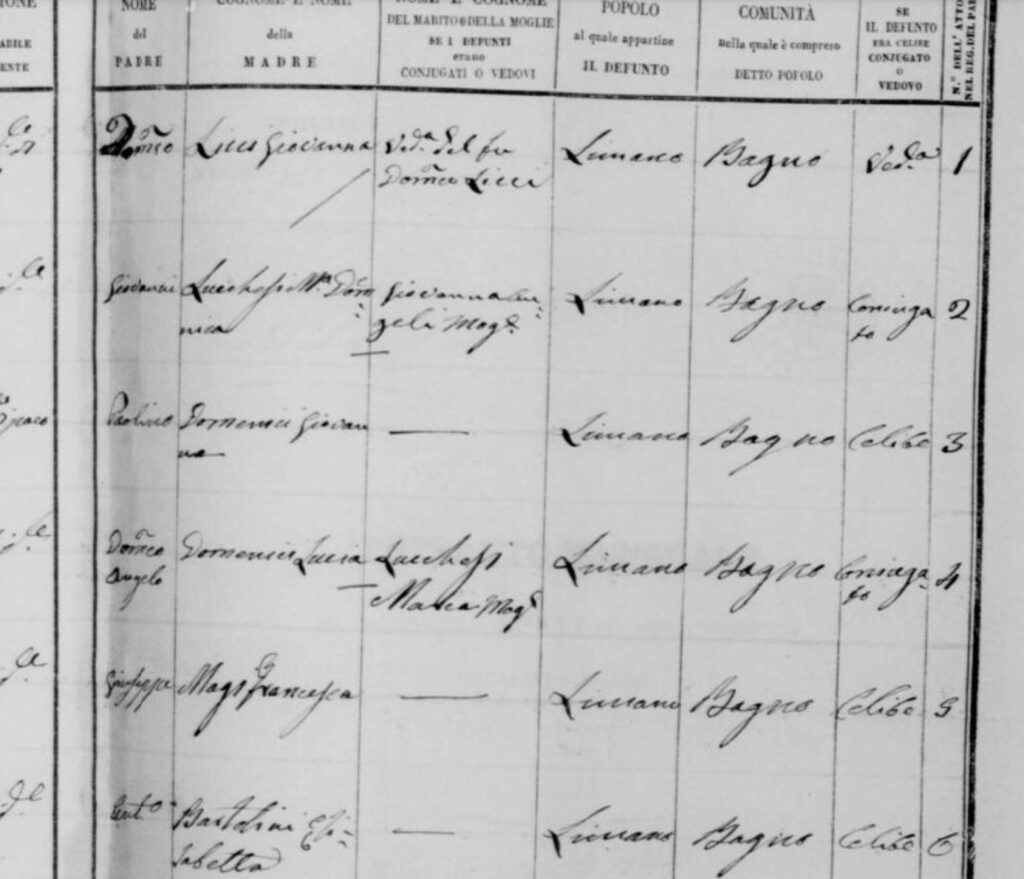
In total, 330 entries containing the Domenici surname were identified and logged in an Excel document. Each entry included the name of the principal individual (whether a newborn child, a deceased person, or an individual in a marriage record associated with the surname), along with the year and entry number. Where available, I recorded the names and ages of parents, and in earlier records, the names of paternal and maternal grandfathers. Each entry also included a direct link to the original source, as well as a comment field used to capture additional details—such as the presence of Domenici witnesses or notes about second marriages.


The surname appeared in different ways depending on the record type. In birth records, it was most often associated with the child or the father, though in some cases it appeared only in the mother. In marriage records, it could be found in either the bride or the groom, and occasionally in one of the parents. In death records, it was recorded for the deceased individual. One limitation became clear during this process: when a Domenici individual married someone with a different surname, and only the non-Domenici spouse appeared in an index, that connection could easily be missed. This issue becomes particularly pronounced in records from 1866 onward, where indexes are less detailed, and recovering those links would require a far more exhaustive page-by-page reconstruction.
wp_mapit_map id=”1562″
At the outset, the entries existed as isolated data points. However, even during the process of data collection, patterns began to emerge. It quickly became apparent that the surname was concentrated in only two villages: Benabbio and Limano.
What began as a search for Maria’s parents had uncovered something unexpected: not one, but two distinct Domenici clusters within Bagni di Lucca. If Maria was not from San Cassiano, then she had to come from one of them. The next step was therefore not simply to collect names, but to reconstruct the families themselves—and identify which of them might contain her origins.
Leave a Reply